Half a century of STRABAG
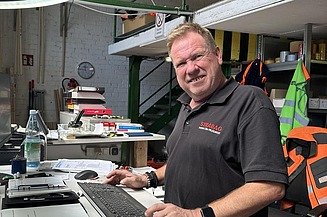
Robert, how does it feel to look back on almost 50 years with the company?
Robert: Very good. When I look back over the past decades, I think above all of a wonderful time. I’ve always felt at home here. There was never a moment when I said, ‘I’ve had enough.’ That’s why I can say with conviction today that, for me personally, my career path has gone perfectly.
How did your journey at STRABAG begin, and how has your career progressed?
Robert: I started in 1976 at Westdeutsche Asphaltwerke with an apprenticeship as an industrial clerk. The company was later taken over by STRABAG, and my entire length of service was recognised. So today, I’ve been with the company for almost 50 years.
During this time, I’ve taken on many different roles. After completing my apprenticeship, I initially worked on construction sites, where I learnt about the practical processes. After my time in the German Armed Forces, I was given the opportunity to join the company as a site manager specialising in mastic asphalt and waterproofing works.
That was a particularly formative period. I was actually supposed to be trained by an experienced colleague for a year. However, he passed away unexpectedly after just a few months, so I was suddenly left to my own devices and had to take on responsibility very quickly.
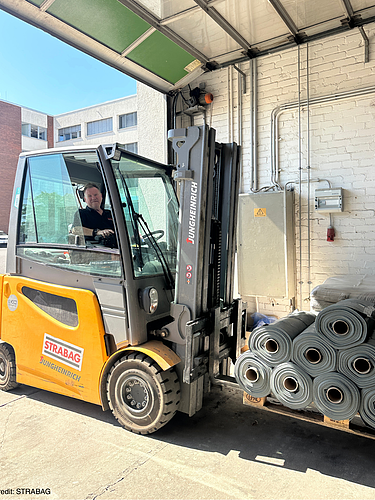
Later, I moved back more into the commercial side of things, ran an office for many years and was responsible, amongst other things, for payroll and various administrative tasks. I’ve been a site storekeeper since around 2012. Together with my colleagues, I ensure that the building sites are supplied with everything they need for their work.
-
How have the work and the technical possibilities changed over the years?
Robert: An incredible amount has changed, of course. When I started out, there were neither mobile phones nor sat-navs. Anyone who had to drive to a building site would take a road map with them and had to plan their own route.
Today, many processes are carried out digitally and communication has become much faster. Nevertheless, some things have remained the same. Ultimately, it’s always about supporting people, solving problems and working together to ensure that everything runs smoothly on the building sites.
Is there one experience that has particularly stuck in your memory?
Robert: Yes, there’s a building site from my time as a young site manager. We were due to work on a large sports hall in Duisburg at the time. Everything was prepared, the materials were already on their way and work was actually ready to start.
Shortly before we were due to start, however, another trade wanted to drain a pipe. Something went wrong and, in no time at all, half the basement was under water. Suddenly, everything had to be cancelled and reorganised, even though the materials had already been delivered.
At the time, of course, it was anything but funny. But I still think back on it today, because situations like that show that you can’t always plan for everything on a building site.
What advice would you give to young colleagues?
Robert: I’d recommend that everyone doesn’t just work in the office, but also gains practical experience on building sites. That’s where you get to know the materials, processes and how everything fits together, and develop a much better understanding of working in the construction industry.
Personally, that time helped me enormously. Much of what I know today I didn’t learn at my desk, but out on the building sites. That’s precisely why I’d recommend that young colleagues make the most of every opportunity to get to know as many different areas as possible.
What are your hopes for the future?
Robert: First and foremost, good health. I also hope that the time I have left until retirement goes well and that STRABAG continues to be successful in the future.
I’ve spent almost my entire working life here and would be delighted if future generations could have similar experiences. For me, it was definitely the right path to take.
Thank you very much for sharing these insights into your fascinating career path, Robert. We wish you all the best for the future and, above all, good health!