Lilian Leading the Way in Safety at STRABAG Canada
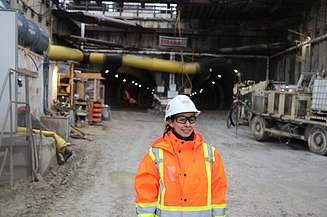
Could you tell us a bit about your role as Health & Safety Manager and what a typical day looks like on the Eglinton Crosstown West Extension?
Lilian: As Health & Safety Manager, my primary responsibility is to ensure that every worker on site goes home safely at the end of the day. This involves developing and enforcing safety protocols, conducting site inspections, leading incident investigations, and working closely with supervisors and crews to identify and mitigate risks proactively.
A typical day includes early morning briefings, reviewing work plans for high-risk activities, visiting active work areas at Mt. Dennis and Jane Portal, and engaging directly with workers to reinforce safe practices. No two days are the same, which is part of what makes the role both challenging and rewarding.
What first sparked your interest in Health & Safety, and how did your career path lead you to join the STRABAG team in Canada?
Lilian: My interest in Health & Safety began early in my career when I saw firsthand the impact that strong safety leadership can have on both individuals and project outcomes. I was drawn to the idea of creating environments where people feel protected and empowered. Over time, I built experience across different industries, which naturally led me to opportunities with global contractors. Joining STRABAG in Canada was an exciting step because of the company’s strong safety culture, international expertise, and involvement in major projects like the Eglinton Crosstown West Extension.
The ECWE is a massive undertaking involving complex tunneling east of Jane Street. What is the most unique safety challengeyou’veencountered on this specific site?
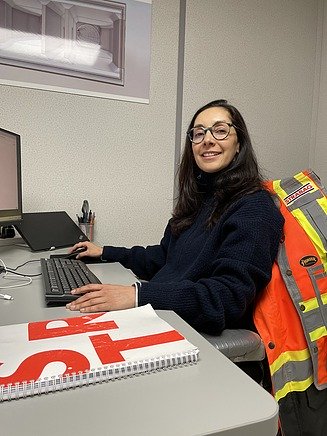
Tunnelling requires a high degree of precision. How do you and your team foster a "Safety First" culture among the crews working underground?
Lilian: Fostering a “Safety First” culture starts with leadership and consistency. We emphasize clear communication, ongoing training, and visible engagement from management. Daily briefings, toolbox talks, and job hazard analyses are key tools, but equally important is encouraging workers to speak up and take ownership of safety. We promote a culture where stopping work for safety concerns is fully supported. Recognition programs and positive reinforcement also help reinforce safe behaviours across all levels of the workforce.
Looking at the progress of the ECWE, what is one safety milestone or initiative that you are particularly proud of?
Lilian: One milestone I’m particularly proud of is achieving significant project progress while maintaining a strong safety record, especially in high-risk tunnelling operations. Additionally, implementing and reinforcing safe work procedures, communications, proactive engagement across all crews in HS activities, and real-time monitoring systems has helped elevate our overall safety performance and set a strong benchmark for future phases of the project.
For someone looking to start a career in construction health and safety, what is the one piece of advice you’d give them based on your experience here?
Lilian: My advice would be to stay curious and never stop learning. Health and Safety is constantly evolving, and success in this field requires both technical knowledge and strong interpersonal skills. Take the time to understand the work being done on site, build relationships with crews, and always lead by example. Credibility is built through consistency, knowledge, and genuine care for people.
STRABAG is a global company. If you could visit any other STRABAG project in the world, which one would it be and why?
Lilian: I would be particularly interested in visiting one of STRABAG’s large-scale tunnelling or underground infrastructure projects in Europe. These projects often involve advanced engineering techniques and complex geological conditions.
Thank you for your exciting insights and all the best, Lilian!