Um dieses Video abspielen zu können, müssen Sie Cookies von US-Anbietern akzeptieren. Einzelheiten hierzu finden Sie unter Cookie-Einstellungen in unserer Datenschutzerklärung.
Die Einwilligung zum Setzen der Cookies von US-Anbietern kann entweder hier oder unter Cookie-Einstellungen in unserer Datenschutzerklärung erteilt werden.
Der Widerruf der bereits erteilten Einwilligung kann auf dem gleichen Wege erfolgen.
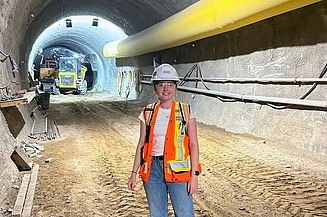
Elizabeth on the Eglinton Crosstown West Extension Project
22 Jun 2026
To mark International Women in Engineering Day, we’re celebrating Elizabeth, who just wrapped up a standout trainee program as a Project Engineer on Toronto’s Advanced Tunnelling Contract 2 (ATC2) project in Canada.
You helped trial an automated surveying system on ATC2. How do you see technology like this changing the day-to-day safety of engineers on-site in the future?
Elizabeth: Technology is already reshaping the day-to-day safety of engineers on construction sites, and I see this significantly increasing over the coming years. The automation of the surveying process removes people from high-risk zones where people are constantly interacting with equipment, and as people plant interaction is probably the largest killer of people involved in construction projects all over the world, removing surveyor's and engineer's interactions with live excavations allows them to be safely positioned within the tunnel.
The combination of technologies such as automated survey systems, sensor systems and camera systems, along with other new technologies designed to minimize people plant interaction, will improve on-site safety significantly.
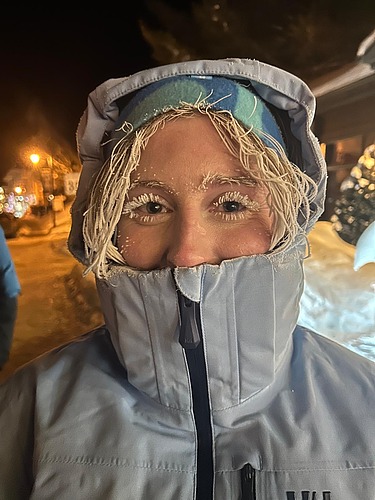
Having worked under both UK and Canadian standards, what was the most interesting technical or safety difference you encountered while working in Toronto, and how did experiencing Canada's extreme seasons like a staggering -30°C during a Polar Vortex change your perspective on designing and building resilient infrastructure?
Elizabeth: The most interesting aspect of adapting from UK to Canadian standards was learning how infrastructure and construction materials respond to the harsh Canadian winters. Experiencing a Polar Vortex event with temperatures dropping to -30°C completely shifted my perspective on resilience. It demonstrated a critical need to design structures that can accommodate massive temperature ranges, which affect everything from the behavior of materials like the concrete curing process and how sprayed concrete reacts to freezing temperatures to the intense expansion and contraction of soil during freeze-thaw cycles.
To maintain productivity and efficiency in these extreme conditions, we had to implement major modifications to the construction process. This included updating material specifications to survive the entire service life of the structure, alongside immediate site-level adaptations such as deploying frost fighters, installing freeze protection systems around electrical and utility services, and integrating rigorous snow removal into the active project schedule.
You noted that safety briefings in Canada differ from some of the other locations you have worked in. What is one specific safety practice from the Toronto site that you think every major infrastructure project should adopt?
Elizabeth: I particularly valued the daily safety moments presented at ATC2. While a weekly deep dive is standard in many parts of the industry including my experience in the UK—the daily cadence here allowed us to continuously build on the week's topic. By facilitating daily discussions and leveraging the vast, diverse experience of the Canadian team, we were able to integrate real-time lessons learned. This progressive approach really cemented the core message each week.
Heavy civil construction and tunneling are traditionally male dominated spaces and being "the only woman in the room" or on a job site comes with unique pressures. What was your experience establishing your authority, building trust, and overcoming barriers such as being mistaken for a student and having to prove your credibility more quickly than your male peers and what changes does the industry need to make to ensure more women feel empowered to lead major infrastructure projects?
Elizabeth: Navigating a male-dominated field like heavy civil construction meant facing unique initial pressures, such as frequently being mistaken for a student during my training. This placed extra pressure on me to establish my credibility quickly. To overcome these barriers and build trust, I made a conscious effort to be clear, concise, and professional in all my interactions, while also prioritizing listening to and valuing the extensive practical knowledge of the site teams.
By being consistently present on-site, actively participating in discussions, and engaging in key activities, I built mutual respect and became a familiar, trusted member of the team.
To ensure more women feel empowered to lead major infrastructure projects, the industry must focus on increasing the visibility of female role models in leadership positions. Seeing women in senior engineering and management roles helps normalize their presence and provides clear examples of career progression. Additionally, implementing formal mentorship programs that connect junior women with experienced professionals is crucial for supporting their confidence and long-term career development.
You mentioned the importance of a supportive learning environment. How did the mentorship you received on-site help you transition from being a trainee to taking on the responsibilities of a Project Engineer?
Elizabeth: One of the most valuable aspects of the mentorship was the accessibility of experienced Engineers and supervisors. They were consistently willing to take the time to explain not just what decisions were being made, but why. Quite often I was challenged to come up with the ‘why’ myself and allowed me to use my own experiences to understand the processes we were using.
This helped me develop a deeper understanding of the tunnel construction process, geotechnical risk management, and the reasoning behind selecting specific excavation support measures. Over time, this allowed me to move from simply completing assigned tasks to actively contributing to technical discussions and decision-making.
By the end of your placement, you were sharing your own knowledge with newer team members. What is the number one technical skill you found yourself teaching most often?
Elizabeth: Technically, I shared how to interpret the geotechnical data that we were collecting from all the different types of monitoring instruments and our specific processes that are required when a trigger limit is exceeded. I really enjoyed sharing knowledge about the project but also about Toronto to new trainees especially introducing them to new people and areas of the city that I thought are a must visit while they were here.
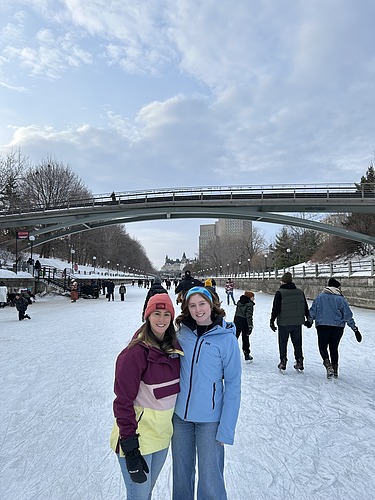
From Blue Jays games to spotting a moose in Algonquin, you truly embraced the Canadian lifestyle. How did these off-site adventures with your fellow trainees and other colleagues impact your professional bond at work?
Elizabeth: Spending time together outside of work helped to build strong personal connections, which translated into better collaboration on site. It created a sense of trust and camaraderie that made day-to-day communication more open and effective. This was particularly valuable on a complex project, where teamwork and clear communication are essential to both productivity and safety.
Spending time with a diverse group of trainees and professionals from different backgrounds strengthened cultural awareness and adaptability—both of which are important skills in large, international projects. It encouraged a more inclusive and supportive working environment, where individuals were more willing to share knowledge and support one another.
As a young engineer who transitioned from a trainee to a Project Engineer on a major project, what advice would you give to other women looking to enter the heavy civil infrastructure field?
Elizabeth: During my time as a Trainee Engineer, I had the opportunity to go out on site in different departments and to work with a number of different projects both in the U.K. and in Europe and also in Canada. Getting as much knowledge as possible when first starting to develop your career will help you gain the confidence to start taking on additional responsibilities
Always stay curious, always stay confident, and ask questions, a lot of questions.
Thank you very much for the interview and all the best for the future!