Shaping sustainability every day
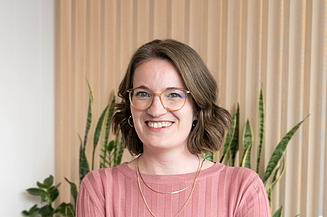
Once a year, Earth Day brings our planet into focus. For Johanna, however, sustainability is not a day of action, but part of her day-to-day work at STRABAG.
"Genuine climate and environmental protection must not stop at symbolism," she says. "It is crucial that sustainability is anchored in our daily actions - in management decisions, processes and implementation on the construction sites."
Sustainability as part of the corporate strategy
Sustainability has been firmly anchored in STRABAG's corporate strategy since 2021. in 2025, the ESG strategy was further sharpened and concretized. It combines ecological goals with social responsibility and responsible corporate governance.
Decarbonization is a central field of action. STRABAG pursues science-based climate targets (SBTi) and works with clearly defined reduction paths.
"These targets are ambitious and they have to be," explains Johanna. "At the same time, it is important to show how they can be achieved step by step and what contribution different areas can make."

Clear structures for sustainable decisions
To ensure that the sustainable transformation is implemented effectively, STRABAG works with a clear governance structure. This defines who is responsible for which decisions and how different levels are involved.
Johanna finds the practical dynamics particularly motivating: many measures and initiatives arise directly in the operational units. Colleagues contribute ideas, test new approaches and develop solutions that fit into everyday working life.
"That's where sustainability really comes to life," she says, "when strategies are not only decided, but also supported and developed by the people in the company."
Communication with responsibility
As part of the Sustainability Management Team, Johanna places a special focus on Group-wide sustainability communication. This includes internal communication of sustainability topics, campaigns, project communication and an advisory role for colleagues throughout the company. A large part of her work consists of communicating sustainability in an understandable, correct and credible way.
"Sustainability communication is always a balancing act," explains Johanna. "We have to formulate the facts as precisely and concretely as possible and at the same time make them simple and understandable so that the content really gets across."
An important project in this context is the sustainability communication guide, which was developed in collaboration with several departments. It provides orientation, sets standards and helps to talk responsibly about sustainability.
Transformation through dialog
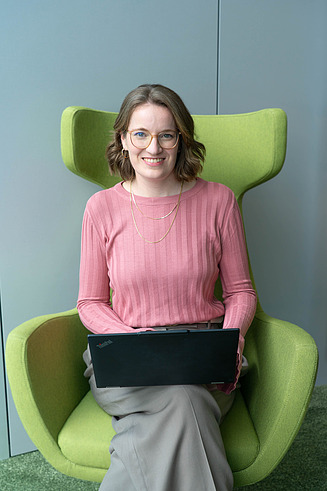
Sustainable transformation does not happen in isolation. This is why STRABAG consciously focuses on exchange and dialog - both internally and externally. Johanna is currently working on organizing the Stakeholder Dialogue, a format that brings internal and external stakeholders together at decision-making level.
"Transformation needs different perspectives," she explains. "Dialogue, collaboration and knowledge transfer are crucial, both within the organization and with external partners."
Looking ahead: key sustainability issues at STRABAG
Looking ahead to the coming years, Johanna sees several topics that will continue to gain in importance at STRABAG. In addition to phasing out fossil fuels, resource efficiency and the circular economy will become more of a focus, i.e. the question of how materials can be kept in the cycle with the highest possible quality.
The preservation of nature and biodiversity also plays a central role, especially for a construction company with a major impact on the environment and landscape. In addition, the "S" in ESG is becoming increasingly important: social responsibility, fair working conditions and added value for society are becoming increasingly recognised as integral parts of sustainable business management.
Leading the way with courage
For Johanna, Earth Day is a good opportunity to raise awareness. At the same time, she makes it clear that sustainable management must go far beyond this.
What she would like to see in the future are courageous decisions and a clear understanding that sustainability and profitability go hand in hand.
"Business as usual is the most expensive alternative," says Johanna. "Sustainability must become the new normal - both within the company and beyond."