London Calling: junior engineer Selma on the HS2 construction site
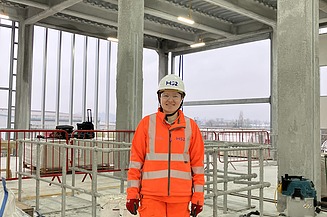
In this interview, she explains what fascinates her about large infrastructure projects, why the junior engineer program was the ideal career start for her and what impressions she took away from her time on the HS2 project in London.
What brought you to STRABAG and why did you choose bridge construction?
Selma: I wanted to physically realize and produce something. Some of my family members work in construction and engineering, so this was an obvious path for me. At the same time, I am fascinated by the combination of practice and theory.
I did a dual bachelor's degree in timber construction and followed it up with a master's degree. During my studies, I came into contact with bridge construction by chance - and was immediately fascinated. This type of structure is exciting, complex and impressive. That's why I specifically looked for a job in bridge construction and found it at STRABAG.
How was your first year at STRABAG?
Selma: My start was really good. I work in a young, motivated team, but at the same time there are also many experienced colleagues from whom you can learn every day. I have gained a variety of insights, traveled a lot and visited different locations. Great bridges are rarely built right on your doorstep.
You are completing the junior engineer program. Give us an insight.
Selma: It has a very varied structure. I worked in controlling, formwork construction, tender preparation, TPA, site management, costing and work preparation. The program is extensive and a great opportunity to learn a lot of new things in a short space of time and discover the diversity within the Group.
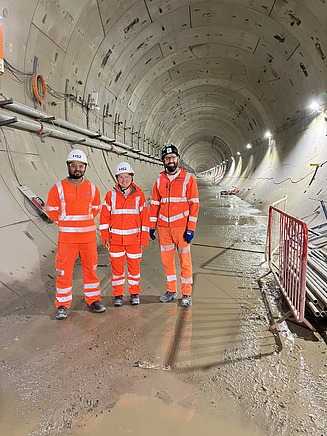
You spent three months abroad as part of the program. What did you experience there?
Selma: I was able to work on the major High Speed 2 (HS2) project in London. The project is currently the largest infrastructure project in Europe and will connect London with Birmingham by high-speed train in the future. Since 2017, the SCS JV consortium (Skanska, Costain and STRABAG) has been building the London section with around 21 kilometers of twin-tube tunnels and 11 access shafts.
During my time on site, I was able to get to know the structures of this mega project and support the construction of the head house, especially the building cladding. I took on tasks in subcontractor support, quality inspection and progress reporting.
What do you particularly remember?
Selma: I was particularly impressed by the very high safety standards, which are associated with an extremely high level of effort. Everyone really pulls their weight here. It was exciting to see that every country has its own regulations and how they are implemented. The collaboration was also great: my colleagues live for their work and are very open and supportive.
Of course, I also got to know English culture in my free time. I did a lot in London, attended sporting events and went on trips to places like Cambridge and Oxford.
To whom would you recommend the junior engineer program?
Selma: To anyone who doesn't yet know exactly which area of construction they would like to work in later. You get to know an incredible number of areas and gain a broad insight into the Group. The experience abroad was also a real highlight.
What are your plans for the future?
Selma: Over the next few years, I would like to learn a lot and gain experience in construction management. Later on, I can also imagine working in the office - in costing or work preparation, for example.
Thank you for your exciting insights and all the best for your future, dear Selma!