This Armed Forces Day (27 June), we are proud to recognise and celebrate the contribution of the Armed Forces community and the valuable skills they bring to the workplace.
At STRABAG UK, we understand that experience gained through military service – from leadership and teamwork to resilience and problem-solving – creates strong foundations for a successful civilian career.
We remain committed to supporting veterans, reservists and service leavers as they build their future with us and continue making a difference across our projects and teams.
Meet some of our colleagues
-
Joe Nairn, Mechanical Fitter
Can you tell us a bit about your military background?
I joined the RAF right after finishing school, at the age of 16. I underwent trade training at RAF Halton and then moved to MOD St. Athan in South Wales, where I earned a Level 3 mechanical qualification.
After 16 months, my first posting was at RAF Leeming near Northallerton, where I completed my NVQ in my first 18 months. My first posting was to the Falklands for four months, where I worked with mechanical transport, specifically on Land Rovers. I spent 6.5 years in the military.
Can you tell us now about your current role at STRABAG UK?
I currently work as a mechanical fitter at STRABAG UK. My role involves looking after, maintaining, and responding to breakdowns of mechanical equipment across the site to ensure everything is running
smoothly.
What skills or experiences from your time in the Armed Forces have been most valuable in your current role?
The skills I gained in the military have been great. Punctuality is crucial; being on time is expected in both the military and in my job. I learned to work alongside teammates of all ages, which emphasised the importance of good communication, teamwork, and camaraderie. These values were drilled into us from the beginning. Also, I earned a trade qualification at a young age.
What advice would you give to someone in the Armed Forces who is considering a career in the construction industry?
It takes time to transition out of the Armed Forces. It’s important to remember that not everything will go right the first time. The construction industry is great. It's massive, and with big companies like
STRABAG, many new sites pop up regularly.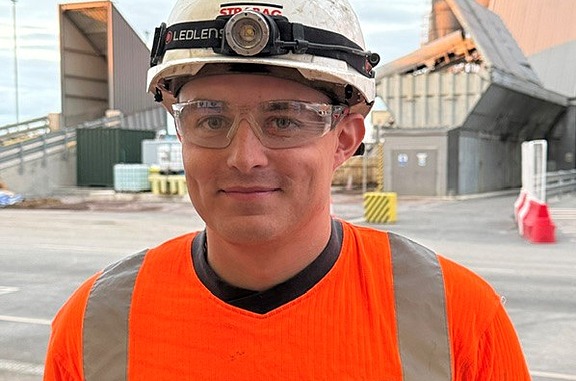
-
Joe Bedford, Concrete Foreman
Can you tell us a bit about your military background?
I joined the armed forces in 2010 and completed my basic 12-week training at Bassingbourn. As a tank driver, I had to spend an extra 6 months of training in Bovington, near Bournemouth. After that, I joined my Regiment, the Royal Dragoon Guards, as a tank driver. I served in the army for a total of five years, before returning to civilian life.
Can you tell us about your current role at STRABAG UK?
I am a Concrete Foreman at the Hartlepool Advanced Manufacturing Facility (HAMF). I joined STRABAG UK eight years ago as a General Operative, and I've taken on just about every job you can think of!
What skills or experiences from your time in the Armed Forces have been most valuable in your current role?
It's mainly the desire to work and being really committed to the job. I take my responsibilities very seriously, I love my job, and I love what I do. Being trustworthy and committed is also essential in the army and something that I have brought forward. You really have to be very passionate about what you do.
What advice would you give to someone in the Armed Forces who is considering a career in the construction industry?
For all those leaving the army and considering a construction career: if you have a goal in mind, you should go for it! I loved my time in the army and wouldn't change it for the world, but I am very grateful for what I do now.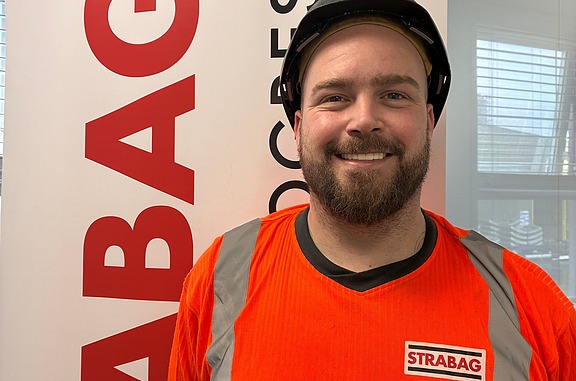
-
Karl Cropper, Mechanical Fitter
Can you tell us a bit about your military background?
I joined the Royal Navy at the age of 19, right after finishing college. I served for six years and worked on three different ships during that time. My role in the Navy was as a mechanic.
Can you tell us about your current role at STRABAG UK?
Currently, I’m a mechanical fitter at the Hartlepool Advanced Manufacturing Facility (HAMF). The work is rewarding, and I appreciate being local to the Hartlepool area.
What skills or experiences from your time in the Armed Forces have been most valuable in your current role?
During my service in the Navy, I completed my NVQs in mechanics, which directly relates to my work at STRABAG. Additionally, the Navy taught me valuable leadership skills and the importance of timekeeping. Both these qualities are essential in military life and in civilian jobs.
What advice would you give to someone in the Armed Forces who is considering a career in the construction industry?
I understand that leaving the military can be daunting since it’s an unknown path, but I encourage you to take the leap and go for it! There are plenty of opportunities out there. The construction industry is welcoming to those with a military background, and the skills you’ve developed set you up for a successful career.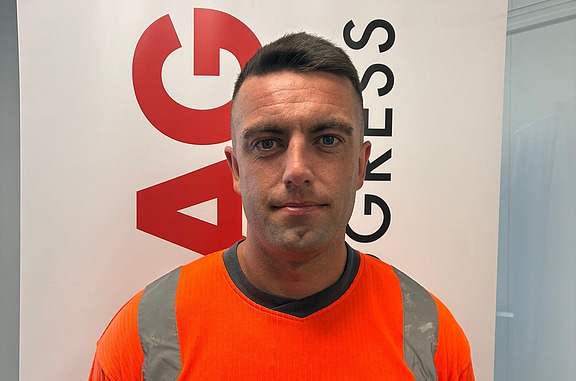
-
Kieran Young, General Operator
Can you tell us a bit about your military background?
I joined the army at the age of 16 and went through training as an army cadet in Stockton on Tees. After basic training in Winchester, I completed my Phase 2 skilled training as a tank gunner commander in Bovington, where
I spent about 12 to 16 weeks learning how to drive tanks and other essential skills.
Following my training, I was deployed to the 9/12th Royal Lancers based in Swanton Morley, Norfolk, in 1996. I left the army after 5.5 years of service.
Can you tell us about your current role at STRABAG UK?
I’m a general operator in the steel hall, doing cage building. I moved from the south, where I previously worked as a scaffolder. I retrained, completed a welding course, and then secured this job.
What skills or experiences from your time in the Armed Forces have been most valuable in your current role?
My main qualification is my HGV license, which I obtained at 17. It's rare to get it that early since you usually have to be 25 in the UK, but military law allowed me to do so. I also have qualifications in signalling, first aid, and more.
In terms of skills, team building is crucial. The bond you share with the people you serve alongside is like that of brothers, and it's a camaraderie that you can only understand if you've lived it. The bond can be stronger than family, as your life depends on each other!
What advice would you give to someone in the Armed Forces who is considering a career in the construction industry?
The army sets you up well for future opportunities Punctuality and timekeeping are key and those values are drilled into you. Working in a construction company aligns well with the skills you gain in the army, as both are manual, hands-on jobs. Teamwork is essential in both fields.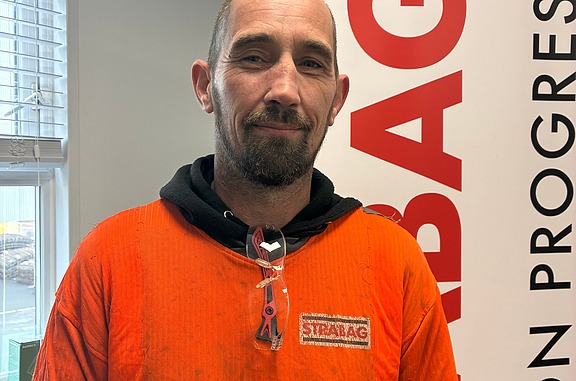
-
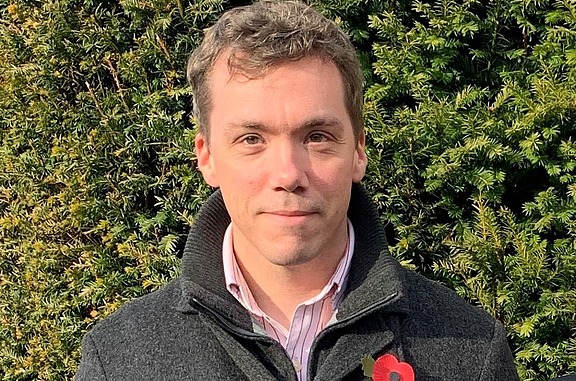
Ian Sivyer, Head of Risk
Can you tell us a bit about your military background and your current role at STRABAG UK?
Currently, I am a Major in the Army Reserve, with 37 years of service. I began my career in the Army’s oldest regiment, the Honourable Artillery Company (HAC), as a Trooper, specialising in long-range reconnaissance and surveillance patrols.
Over the course of my service, I have deployed twice to Iraq, once to Afghanistan, and more recently supported operations in Ukraine and the evacuation from Kabul. I have commanded a missile air-defence battery and later served as Second-in-Command of the HAC. Around half of my career has been spent within 16 Air Assault Brigade, working in its busy operations team, supporting and participating in deployments worldwide.
I am a graduate of the Royal Military Academy Sandhurst and the UK Defence Academy Shrivenham.
Can you tell us about your current role at STRABAG UK?
I am the Head of Risk at STRABAG UK and responsible for leading the delivery of an effective division-wide risk management framework, providing an accurate and timely picture of our risks in order to inform decision-making and meet our objectives.
What skills or experiences from your time in the Armed Forces have been most valuable in your current role?
Flexibility and adaptability, clarity of communication, planning, seeing the big picture, and collaborative working.
What advice would you give to someone in the Armed Forces who is considering a career in the construction industry?
Go for it. The variety of project types and locations offers infinite variety, the objectives-based approach is highly translatable, the team-working environment will be familiar and it offers the potential for personal development and progression.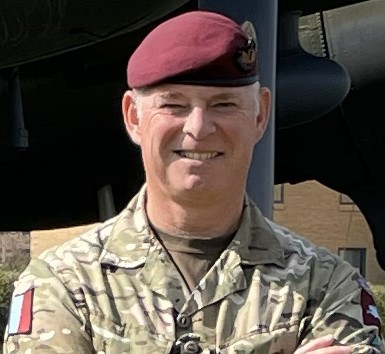
-
Wayne Hudson, Geographic Information System (GIS) Manager
Can you tell us a bit about your military background?
I served for 23 years in the British Army as a Royal Engineer and Geospatial Technician, leaving service earlier this year as a Warrant Officer. During that time, I worked across the globe in some very nice and some not-so-nice places delivering geospatial support to operations and helping people understand and use location-based information to make better decisions in complex environments.
What is your current role at STRABAG?
I now work at STRABAG UK as GIS Manager on the HARP project, where I’ve found a surprising amount of overlap with my military experience. My focus is on connecting geospatial and project data across the programme, improving visibility, and supporting better decision making through digital delivery.
A key part of the role is helping spatial information become available and understandable as early as possible, simplifying downstream decisions, reducing risk and creating opportunities to improve delivery processes.
What skills or experiences from your time in the Armed Forces have been most valuable in your current role?
Construction has been far more similar to defence than I initially expected. I’m surrounded by intelligent, motivated people working within structured and proven delivery frameworks, but in an environment that moves quickly and constantly evolves.
The most valuable skills I’ve brought across have been adaptability, the ability to absorb information quickly and turn complexity into practical decisions. My military experience in training, teaching, leadership, briefing and consulting has been particularly valuable.
What advice would you give to someone in the Armed Forces who is considering a career in the construction industry?
Don’t undersell yourself.
When I left the Army, I came close to narrowing my view of what I could offer. Military experience translates much more broadly than people realise—it’s often more about learning how to articulate that value to a prospective employer. Equally, have confidence in taking the leap; changing roles every few years is normal in the Armed Forces and makes adapting easier than you might think.