From study to practice: how an internship turns into a career
Getting started: orientation through practice
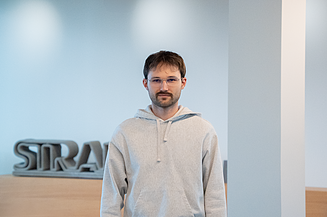
Samuel's career began in the classic way. He developed an interest in design and media technology while still at school: typography, design and his first graphic projects. During his studies, this turned into a combination of design and software development.
"At the beginning, I didn't even realise that this profession existed," he says, looking back. This is a point that many students recognise: The actual job descriptions often only emerge through practical insights.
The entry into the company ultimately took place via an internship. What was initially planned as a brief insight quickly developed into something more:
- first familiarisation with teams and projects
- Insights into real company processes
- Understanding how theory is translated into practice
Large companies, great diversity
What makes the day-to-day work special: the enormous range of projects.
From internal web applications to tools for construction sites and HR systems. Digital solutions are needed everywhere in the company. This is exactly what makes the work so varied:
- Support for application processes
- Applications for operational areas (e.g. construction sites)
- Digitisation of Excel-based processes
- Development of user-friendly interfaces
"At the beginning, you don't realise how many digital solutions are needed internally."
Learning in a real project
During his internship, Samuel quickly took on responsibility, particularly in the area of UI/UX:
Creation of design system components
- Identification of visual inconsistencies
- Carrying out design reviews
- Collaboration on specific product projects
A project of her own with direct exchange within the team was particularly formative:
"You get immediate feedback and can see what really works."
The difference to studying?
- less theory, more practicality
- real requirements instead of "ideal solutions "Close coordination with developers and stakeholders
From working student to full-time employee
After the practical semester, Samuel returned as a working student. And finally, after his studies, direct entry.
The switch to a full-time role changed one thing in particular: the responsibility
- own projects instead of support
- greater involvement in interdisciplinary teams
- more coordination with developers and specialist departments
Collaboration is also becoming more intensive:
Design is no longer an isolated area, but part of a larger whole with regular dialogue between UX, development and specialist departments.
Working in a team: culture and collaboration
A key success factor is the team: it was a well-coordinated unit characterised by open communication and rapid integration. Knowing the processes and colleagues had a particularly positive effect on the return to work. This made it very easy and no new adjustments were necessary. This continuity creates a sense of security and strengthens confidence, especially during the transition from university to work.
Learning, questions, progress
One of the most important lessons learnt in the first few years of work: Communication is crucial.
"You should always ask questions, otherwise you will realise later that you have misunderstood things."
In addition, learning develops organically:
- through projects
- through exchange with colleagues
- through new challenges
The future: development instead of stagnation
From Samuel's perspective, his view of the future is also clearly characterised by further development - standing still is not an option for him. He sees his next steps in particular in the expansion of design systems and in working on larger, strategic projects. Another important aspect for him is technological progress:
"Even with AI, you need people who understand and control processes."
Conclusion: Careers are built on opportunities and the courage to seize them
Or, as he summarises it himself:
Thank you for the insights into your exciting career path and have fun and continued success!